
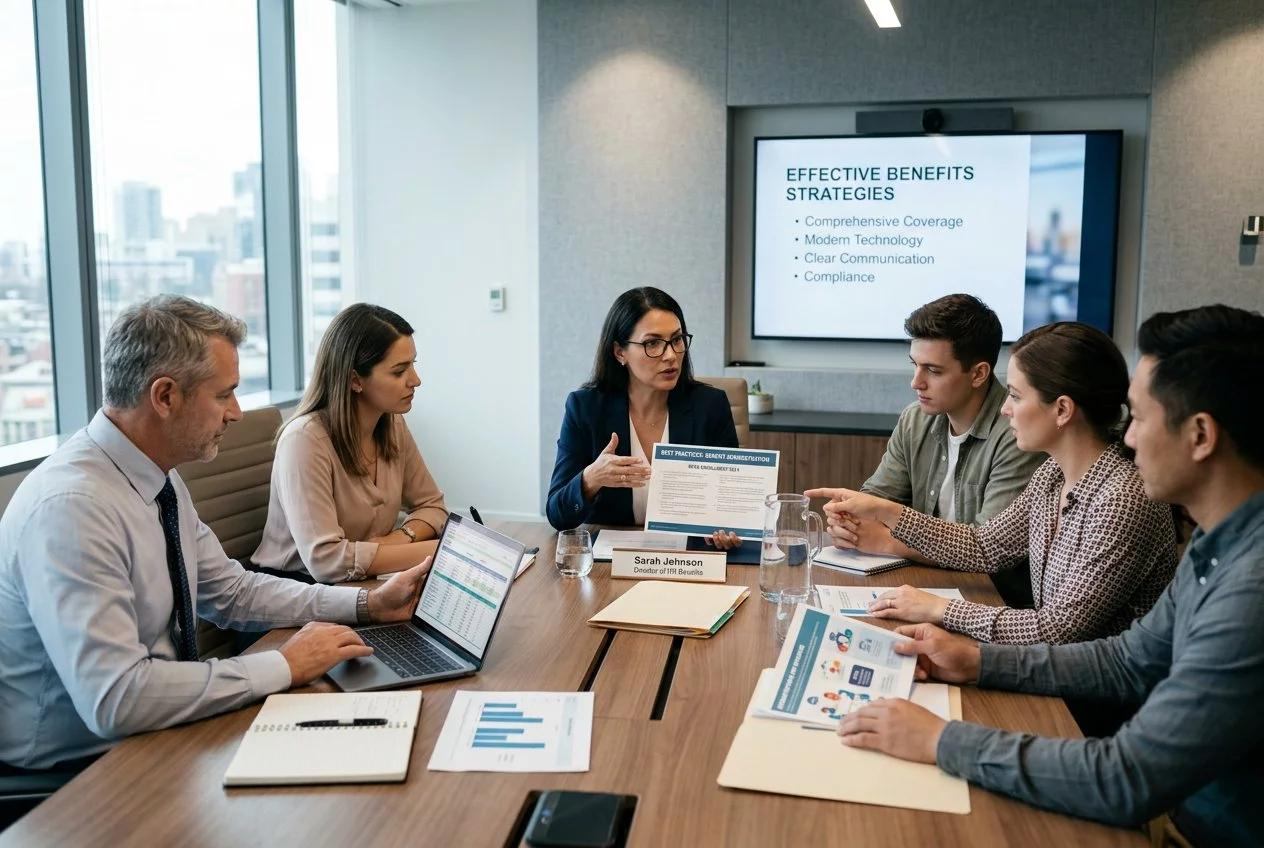
Employee benefits administration is an important part of modern human resources operations. Well-organized administrative processes help organizations maintain accurate employee information, coordinate enrollment activities, manage documentation, and improve communication across departments. As organizations continue refining their administrative workflows, many review compatibility with paycor while modernizing benefit administration procedures to support consistency, digital organization, and effective employee services. By following practical best practices, businesses can simplify routine administration while creating structured processes that remain reliable as organizational needs continue to evolve.
Establish Clear Administrative Procedures
A successful benefits administration program begins with clearly documented procedures.
Organizations should define every stage of benefit administration, including eligibility reviews, enrollment activities, documentation requirements, employee updates, administrative approvals, and communication practices.
Documented workflows help employees understand administrative processes while providing human resources teams with consistent operational guidance.
Clearly defined procedures also reduce uncertainty because responsibilities remain transparent throughout every stage of administration.
Organizations that regularly review and update their procedures are better prepared to adapt to changing workplace requirements without disrupting daily operations.
Maintain Accurate Employee Information
Reliable employee information forms the foundation of effective benefits administration.
Organizations should maintain centralized employee records that include eligibility details, enrollment history, employment updates, department assignments, completed administrative activities, and supporting documentation.
Routine verification helps ensure that records remain current throughout every stage of employment.
Maintaining organized information also improves collaboration because authorized personnel work from the same verified records rather than separate versions maintained by different departments.
Accurate employee data contributes to smoother administrative coordination and more consistent operational practices.
Organize Enrollment Activities
Enrollment processes become much easier to manage when they follow structured workflows.
Organizations should establish consistent procedures that guide employees through enrollment periods, documentation requirements, eligibility confirmation, administrative approvals, and completion of required records.
Providing employees with clear instructions reduces confusion while supporting more efficient administrative coordination.
Standardized enrollment activities also simplify future updates because documentation remains organized and accessible whenever administrative changes occur.
Well-planned enrollment procedures create a positive experience for both employees and administrative teams.
Standardize Internal Processes
Consistency remains one of the strongest foundations of successful benefits administration.
Organizations benefit from creating standardized procedures for documentation updates, eligibility reviews, enrollment activities, administrative approvals, communication, and record maintenance.
Standardized forms, templates, naming conventions, and workflow documentation help ensure that similar administrative situations are handled consistently across departments.
Documented procedures also simplify training for new human resources professionals because operational expectations remain clearly defined.
Regular process reviews support continuous improvement while preserving organizational stability.
Use Digital Document Management
Digital documentation has become an essential part of modern benefits administration.
Organizations increasingly replace paper files with electronic records that improve document organization, simplify retrieval, and support long-term administrative continuity.
Enrollment forms, eligibility records, employee acknowledgments, administrative correspondence, and supporting documents can all be maintained within structured digital filing systems.
Version tracking allows organizations to monitor updates while preserving complete historical documentation.
Digital document management strengthens consistency while reducing unnecessary administrative complexity.
Improve Communication with Employees
Clear communication helps employees better understand administrative procedures and organizational expectations.
Organizations should establish structured communication practices that provide timely information regarding enrollment periods, eligibility updates, documentation requirements, and administrative processes.
Employees benefit from receiving information through consistent communication channels that remain organized and easy to access.
Managers also benefit from standardized communication methods that support cooperation with human resources teams throughout administrative activities.
Open communication contributes to smoother administrative operations while strengthening employee confidence in organizational processes.
Encourage Collaboration Across Departments
Benefits administration depends on cooperation between multiple organizational functions.
Human resources professionals, managers, supervisors, and administrative teams all contribute information that supports employee benefit administration.
Organizations should encourage collaboration through shared documentation, standardized workflows, centralized information management, and clearly assigned responsibilities.
When departments coordinate using organized procedures, administrative activities become more efficient while reducing duplicate work.
Collaborative workflows also improve organizational flexibility whenever employee information or administrative requirements change.
Simplify Routine Administrative Tasks
Many benefit administration activities involve repetitive administrative responsibilities.
Organizations can improve efficiency by organizing recurring tasks such as documentation updates, enrollment confirmations, approval routing, employee notifications, and administrative follow-ups through structured workflows.
Simplifying repetitive activities allows human resources professionals to devote more attention to employee support, communication, and continuous improvement.
Clearly organized workflows also reduce unnecessary administrative delays by establishing consistent procedures for recurring responsibilities.
Practical simplification contributes to smoother daily operations.
Support Modern Human Resources Practices
Employee benefits administration works closely with broader human resources activities.
Modern HR practices encourage integrated administrative workflows that connect employee records, onboarding activities, workforce planning, documentation management, communication, and organizational development.
When benefits administration follows the same structured processes as other HR functions, organizations create greater operational consistency.
Integrated administrative practices also strengthen collaboration while improving overall organizational coordination.
Supporting modern HR methods helps organizations remain adaptable as workplace expectations continue evolving.
Review Administrative Processes Regularly
Successful benefits administration depends on continuous evaluation.
Organizations should periodically review documentation quality, administrative workflows, communication methods, enrollment procedures, employee feedback, and record management practices.
Regular evaluations help identify opportunities to simplify procedures, strengthen documentation, improve communication, and refine operational workflows.
Employee observations also provide valuable insight because staff members interact directly with administrative processes throughout their employment.
Small improvements introduced consistently over time often create meaningful long-term benefits.
Prepare for Organizational Growth
As organizations expand, employee benefits administration naturally becomes more detailed.
Additional employees, changing organizational structures, new departments, and evolving administrative responsibilities require systems that remain organized as complexity increases.
Scalable administrative procedures allow organizations to extend existing workflows while preserving familiar operational practices.
Flexible documentation systems and standardized processes help organizations maintain consistency during periods of growth.
Planning for future development also supports long-term operational continuity.
Looking Ahead
Best practices for employee benefits administration focus on organized workflows, accurate employee records, standardized internal procedures, digital document management, effective communication, and continuous improvement. Together, these practices help organizations build administrative environments that are efficient, well-structured, and capable of supporting changing workforce needs.
As workplaces continue evolving, organizations that invest in thoughtful administrative planning, consistent documentation, collaborative communication, and modern human resources practices will be well positioned to maintain reliable employee benefits administration while strengthening overall HR operations. By combining practical organization with ongoing process refinement, benefits administration becomes an important part of creating efficient, coordinated, and sustainable workplace management.